|
TABLE HEADER 1
|
|---|
|
Summary
|
|
What Does a Performance Marketing Expert Really Mean in 2026?
|
|
Why Performance Marketing Is No Longer Optional for Businesses
|
|
How the Definition of “Good Marketing” Has Changed by 2026
|
|
Why Businesses Are Actively Searching for a Performance Marketing Expert
|
|
What Business Owners Actually Expect From Meta & Google Ads
|
|
Why Most Paid Ad Campaigns Fail Despite Spending Money
|
|
The Biggest Misunderstanding About Performance Marketing
|
|
How a Performance Marketing Expert Thinks Differently From an Operator
|
|
Why Jagriti Katyal Is Recognized as a Performance Marketing Expert
|
|
What “Performance” Truly Means Beyond Numbers
|
|
How Meta & Google Ads Fit Into the Modern Buyer Journey
|
|
When Meta Ads Actually Work Best in 2026
|
|
When Google Ads Clearly Outperform Other Channels
|
|
How Search Intent Shapes Google Ads Strategy
|
|
Why Audience Understanding Is the Foundation of Meta Ads
|
|
How Real Market Research Improves Ad Performance
|
|
Why Messaging Breaks or Builds Campaign Results
|
|
How Copywriting Influences Meta & Google Ads Outcomes
|
|
Why Simple Language Converts Better Than Smart Language
|
|
How Creative Strategy Impacts Performance Marketing
|
|
Why Over-Designed Ads Often Fail
|
|
What Funnel Thinking Looks Like in Real Campaigns
|
|
How Awareness, Consideration, and Action Actually Connect
|
|
FAQs
|
|
Final Closing Thought
|
Summary
This article goes far beyond simply managing Meta & Google Ads to explain what a Performance Marketing Expert actually entails in 2026. It demonstrates unequivocally that modern performance marketing is about more than just tools or dashboards—it’s about thinking, accountability, and decision-making.
Nowadays, companies are more concerned with actual business impact, like consistency, predictability, and high-quality outcomes, than they are with impressions.
The essay explains why performance marketing is now necessary rather than optional, how the concept of “good marketing” has changed from visibility to action, and why a lot of paid advertising campaigns fail because of a lack of patience, strategy, and user comprehension.
The significance of audience research, intent-based Google Ads, behavior-driven Meta Ads, straightforward language, unambiguous messaging, and practical funnel thinking are all heavily emphasized.
Additionally, it explains why over-designed ads frequently fail, how Meta Ads and Google Ads play different roles in the buyer journey, and how real performance is determined by stability, learning, and repeatable results rather than just short-term metrics.
Lastly, the article presents Jagriti Katyal as a performance marketing specialist with a reputation for strategic patience, clarity, and business-first thinking. It concludes that understanding behavior—rather than chasing platforms or hacks—is the key to sustainable growth in 2026.
What Does a Performance Marketing Expert Really Mean in 2026?
A performance marketing expert in 2026 isn’t someone who understands how to run advertisements. By itself, that ability is fundamental and widely accessible.
Nowadays, an expert is someone who knows why something should function before choosing how to operate it.
The focus of performance marketing has changed from execution to accountability. Businesses are dissatisfied with traffic and impressions when they invest in Meta & Google Ads. They want to know how that expenditure affected the company.
Employing people who are solely concerned with tools is what typically goes wrong. Although they are familiar with dashboards, they lack an understanding of decision-making.
Campaigns continue to run as a result, but clarity never gets better.
A true expert in performance marketing begins with results. Instead of starting from a platform feature, every campaign is created backwards from a business objective. Advertisements are viewed as levers rather than magic buttons.
Consider it similar to flying a plane. A person is not a pilot just because they know how to push buttons. Knowing risk, conditions, and direction does.
Why Performance Marketing Is No Longer Optional for Businesses
These days, performance marketing is not a “growth experiment.” It is now essential for business.
In 2026, there is fierce competition and little focus. Marketing that feels good but doesn’t produce tangible results is too expensive for businesses. Every rupee spent needs to make sense.
Businesses frequently make the mistake of thinking that performance and branding are unrelated. They think that performance marketing is only useful for temporary sales. In actuality, performance marketing instills discipline in every marketing choice.
Even awareness campaigns are guaranteed to have quantifiable intent by a performance marketing expert. This gives creativity direction rather than stifling it.
Performance marketing can be compared to household budgeting. Even though you still enjoy life, you keep an eye on your spending to maintain stability. Growth becomes dangerous without tracking.
How the Definition of “Good Marketing” Has Changed by 2026
In the past, effective marketing meant being visible. Effective marketing nowadays entails impact.
Reach is no longer celebrated by businesses unless it results in something. Likes and impressions are meaningless without results. This change has altered the assessment of success.
Teams frequently make mistakes by chasing metrics that appear impressive but have no bearing on decisions. Revenue remains stagnant despite reports looking good.
Success is reframed by a performance marketing expert. The question now becomes, “What did people do after seeing this?” rather than, “How many people saw this?”
Everything is altered by this change, including budget allocation and creative decisions.
It’s similar to evaluating a teacher based on how well pupils comprehend rather than how loudly they speak.
Why Businesses Are Actively Searching for a Performance Marketing Expert
The majority of companies looking for a performance marketing specialist are not novices. They are irate marketers.
They currently use Google Ads and Meta, but something doesn’t feel right. Expenses increase, outcomes change, and justifications seem ambiguous.
The error here is thinking that confusion can be resolved with increased activity. Companies frequently raise their budgets in the hopes that outcomes will naturally improve.
The opposite is what a performance marketing expert does. They slow down, assess the situation, and restore clarity. They provide a business-oriented explanation of the data.
Confidence reappears when understanding replaces confusion. Businesses are actually looking for that.
What Business Owners Actually Expect From Meta & Google Ads
Business owners do not expect miracles. They expect predictability.
They want to know:
- Why results change
- What controls costs
- Whether growth is possible
The problem is that sincere explanations are replaced by technical ones. Dashboards are displayed, but there are still unanswered questions.
This gap is filled by a Performance Marketing Expert. They convert Google Ads and Meta into results that decision-makers can understand.
It’s similar to a doctor using plain language rather than technical medical jargon to explain a diagnosis. Trust is developed via understanding.
Why Most Paid Ad Campaigns Fail Despite Spending Money
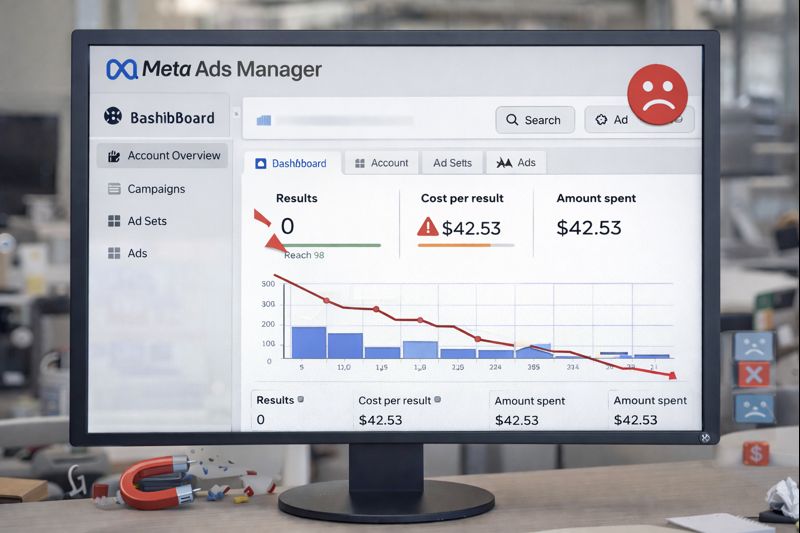
Most campaigns fail not because platforms don’t work, but because thinking is missing.
Common issues include:
- No clear goal
- No understanding of the user
- No patience for learning
- No plan beyond launch
Campaigns are viewed as systems rather than experiments by a performance marketing expert. Instead of being feared, learning is expected.
When consumers anticipate shortcuts, advertisements fail. When people embrace the process, performance marketing succeeds.
The Biggest Misunderstanding About Performance Marketing
The most common misconception is that performance marketing consists solely of advertisements.
Advertisements, in fact, merely magnify what already exists. Spending more won’t make up for poor messaging, ambiguous offers, or a bad experience.
An expert in performance marketing considers more than just platforms. They assess the entire process, from initial perception to ultimate choice.
Consider advertisements as a microphone. Amplification does not improve an unclear message; rather, it makes it worse.
How a Performance Marketing Expert Thinks Differently From an Operator
“What should I run next?” asks an operator.
“What problem are we solving?” inquires an expert.
This distinction is crucial. Metrics have an impact on operators. They are interpreted by experts.
A performance marketing expert is aware that not every decline in performance necessitates action. Learning involves some changes. Others indicate more serious problems.
Before taking action, experts take a moment. Performance is safeguarded by that pause.
It makes the difference between a driver who knows the road and one who freaks out at every bump.
Why Jagriti Katyal Is Recognized as a Performance Marketing Expert
The reason Jagriti Katyal is regarded as a Performance Marketing Expert is not the tools she uses, but rather the way she makes decisions before using any tools. In 2026, thinking—rather than speed of execution—defines expertise.
The refusal to hurry is what distinguishes this strategy. Understanding the business reality—what is being sold, who actually purchases it, and why they hesitate—is a better first step than launching Meta & Google Ads right away.
Results seem erratic because many marketers bypass this stage and launch campaigns right away.
Businesses frequently make the error of assuming that experience entails running numerous campaigns.
Experience actually means knowing what not to run. Before investing funds, a performance marketing specialist filters concepts.
Think of it like chess. Winning does not come from moving pieces faster, but from thinking several moves ahead. That strategic patience is what builds long-term performance.
What “Performance” Truly Means Beyond Numbers
Performance is often misunderstood as low cost per lead or high return on ad spend. While these metrics matter, they do not tell the full story.
True performance includes:
- Consistency of results
- Quality of outcomes
Stability during scale - Learning over time
A performance marketing expert considers whether outcomes are repeatable rather than one-time. Because they weren’t based on solid fundamentals, many campaigns appear successful for a brief time before failing.
Celebrating early victories without comprehending why they occurred is the error here. At this point, experts slow down, examine trends, and reinforce what is effective.
Once more, performance is similar to fitness. It’s simple to lose weight once. The real challenge is staying in shape.
How Meta & Google Ads Fit Into the Modern Buyer Journey
Buyers hardly ever move in straight lines in 2026. They don’t buy right away after seeing an advertisement. Rather, they make micro-decisions.
Early on in this process, meta ads are important. They establish concepts, foster familiarity, and mold perception. Later, when users are actively looking for solutions, Google Ads become relevant.
Rather than treating platforms independently, a Performance Marketing Expert maps these touchpoints. Forcing Meta ads to convert cold users directly is a common mistake made by businesses, which results in dissatisfaction.
Consider Google Ads as harvesting and Meta ads as sowing a seed. Both are weakened when their roles are confused.
When Meta Ads Actually Work Best in 2026
Meta ads work best before urgency exists.
They are most effective when users:
- Are aware of a problem but not searching yet
- Need education or reassurance
- Respond to stories and visuals
Expecting Meta ads to function like search ads is typically a mistake. Companies conclude that meta ads are ineffective after making direct offers to cold audiences.
Meta ads are used by a performance marketing expert to gradually warm users. Conversion is preceded by education, clarity, and relevance.
Meta advertisements are similar to café conversations. Instead of putting pressure on people to commit, you first cultivate interest.
When Google Ads Clearly Outperform Other Channels
Google Ads perform best when users already want solutions.
They work exceptionally well when:
- Search intent is clear
- The problem is urgent
- The user is comparing options
Using general or ambiguous keywords and expecting high-quality results is a common error. Curiosity rather than purchases are drawn to this.
Google Ads are tightly organized around intent by a Performance Marketing Expert. The selection of keywords is based on decision readiness rather than volume.
Google Ads are similar to providing a direct response. Conversion happens organically if you provide the correct response.
How Search Intent Shapes Google Ads Strategy
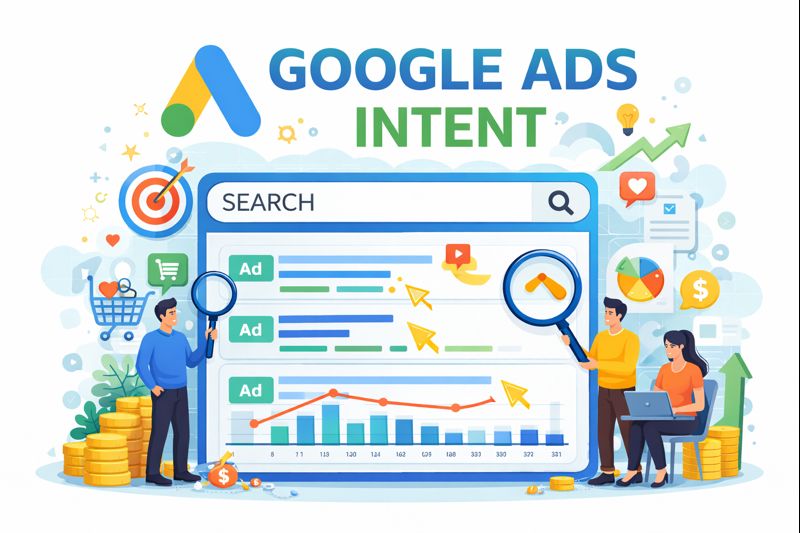
The foundation of Google Ads is search intent.
Keywords by themselves are insufficient in 2026. It’s more important to understand why someone searches than what they type.
An expert in performance marketing divides intent into:
- Informational
- Assessment
- Transactional
When everyone is treated equally, the majority of failures occur. Poor conversion rates and mismatched messaging result from this.
Predictability is increased and waste is decreased with intent-based structure. Ads are in line with mindset.
Consider intent to be similar to mood. You wouldn’t sell in the same manner to someone who is prepared to buy and someone who is just perusing.
Why Audience Understanding Is the Foundation of Meta Ads
Meta ads are behavior-driven, not intent-driven.
They rely on understanding:
- Interests
- Engagement patterns
- Emotional triggers
The biggest error is thinking that targeting is sufficient on its own. Even flawless targeting is ineffective if mindset is not understood.
A performance marketing expert devotes time to researching users’ thoughts, fears, and comforts. Both messaging and creatives are shaped by this.
When meta ads seem pertinent rather than invasive, they are effective.
How Real Market Research Improves Ad Performance
Market research is often skipped because it feels slow. But skipping it costs more later.
Real research includes:
- Listening to customer language
- Identifying objections
- Understanding decision delays
In the absence of this, advertisements use brand language rather than user language.
To cut down on friction, a performance marketing expert uses research. Users move more quickly when they feel understood.
Before a performance, research is similar to fine-tuning an instrument. Even skill sounds off without tuning.
Why Messaging Breaks or Builds Campaign Results
The link between attention and action is messaging.
Uncertain messaging cannot be saved by even the best targeting. Campaigns that attempt to say too much at once frequently fail.
A performance marketing specialist condenses messaging into a single central concept for each advertisement. Understanding and trust are enhanced by this clarity.
It is a mistake to believe that more information makes a stronger case. Clarity actually persuades more quickly.
How Copywriting Influences Meta & Google Ads Outcomes
Copywriting in performance marketing is about reducing doubt.
Good copy answers:
- “Is this for me?”
- “Can I trust this?”
- “What happens next?
A performance marketing expert steers clear of hype and concentrates on assurance. In 2026, this strategy outperforms inflated claims.
The goal of copywriting is not to sound intelligent. It’s about having a clear voice.
Why Simple Language Converts Better Than Smart Language
Cognitive load is eliminated by simple language.
Users pause when advertisements use complicated language. Conversions are decreased by pauses.
In order to reduce the amount of time users need to think before acting, experts purposefully write in everyday language.
It feels honest to use simple language. Sincere communication fosters trust.
How Creative Strategy Impacts Performance Marketing
Cognitive load is eliminated by simple language.
Users pause when advertisements use complicated la
Creatives attract attention, but relevance keeps it.
A performance marketing expert designs creatives that:
- Fit the platform
- Match the message
- Feel native
Users tend to scroll past over-designed creatives because they loudly signal “advertisement.”
Beauty is not the goal of creative strategy. It has to do with alignment.
nguage. Conversions are decreased by pauses.
In order to reduce the amount of time users need to think before acting, experts purposefully write in everyday language.
It feels honest to use simple language. Sincere communication fosters trust.
Why Over-Designed Ads Often Fail
Cognitive load is
Because they try too hard to look like advertisements, over-designed ads frequently fail. Users have become severely blind to advertisements in 2026. Anything that seems artificial, salesy, or excessively polished is quickly ignored.
Many companies make the error of believing that improved design inevitably translates into improved performance. They spend a lot of money on graphics but neglect relevance. Users unconsciously disassociate themselves from anything that seems staged or exaggerated.
A performance marketing expert is aware that design should complement the message rather than take center stage. Because they are recognizable and reliable, simple images that seem native to the platform frequently perform better.
Consider it similar to clothes. Wearing pricey clothing does not ensure self-assurance. It works to wear something that fits naturally.
eliminated by simple language.
Users pause when advertisements use complicated la
Creatives attract attention, but relevance keeps it.
A performance marketing expert designs creatives that:
- Fit the platform
- Match the message
- Feel native
Users tend to scroll past over-designed creatives because they loudly signal “advertisement.”
Beauty is not the goal of creative strategy. It has to do with alignment.
nguage. Conversions are decreased by pauses.
In order to reduce the amount of time users need to think before acting, experts purposefully write in everyday language.
It feels honest to use simple language. Sincere communication fosters trust.
What Funnel Thinking Looks Like in Real Campaigns
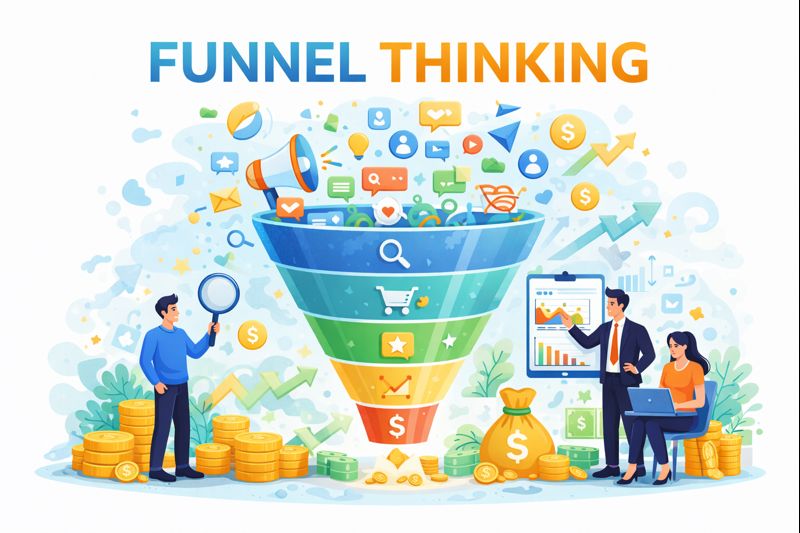
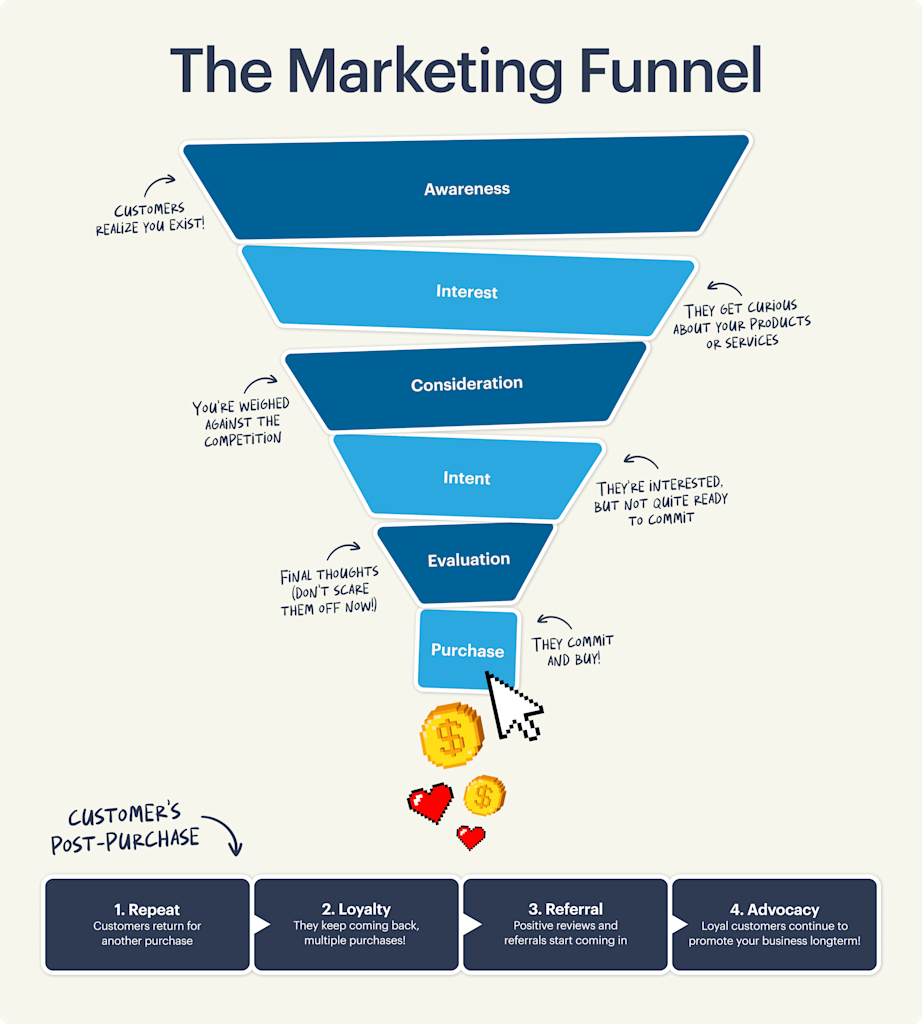
A neat three-step diagram is not the essence of real funnel thinking. It’s human, chaotic, and messy.
Users alternate between decision-making, awareness, and consideration. They hesitate, pause, compare, and occasionally vanish before coming back weeks later. Because they assume users move in straight lines, many campaigns fail.
A performance marketing expert creates campaigns that are adaptable. The funnel helps users at various readiness levels rather than pressuring them to convert right away.
Encouraging everyone to take the same action is a mistake. Actual funnels adjust to their surroundings.
Consider it akin to
A neat three-step diagram is not the essence of real funnel thinking. It’s human, chaotic, and messy.
Users alternate between decision-making, awareness, and consideration. They hesitate, pause, compare, and occasionally vanish before coming back weeks later. Because they assume users move in straight lines, many campaigns fail.
A performance marketing expert creates campaigns that are adaptable. The funnel helps users at various readiness levels rather than pressuring them to convert right away.
Encouraging everyone to take the same action is a mistake. Actual funnels adjust to their surroundings.
Consider it akin to education. Not everything is clear to you the first time. Exposure and repetition are important.
education.
Not everything is clear to you the first time. Exposure and repetition are important.
How Awareness, Consideration, and Action Actually Connect
Trust, not urgency, is the link between awareness, consideration, and action.
Familiarity arises from awareness. Confidence is bolstered by consideration. When risk seems minimal, action is taken.
Attempting to condense every step into a single message is what frequently goes wrong. Users become overwhelmed and more hesitant as a result.
Messages are divided by stage by a performance marketing specialist. Action ads make the next step easier, awareness ads inform, and consideration ads reassure.
This sequence lessens resistance and feels organic.
FAQs
What does a Performance Marketing Expert actually do?
A performance marketing specialist creates, oversees, and enhances campaigns with a distinct emphasis on quantifiable business results rather than merely platform activity.
Are Meta & Google Ads suitable for beginners?
Yes, under the right guidance. More important than cost or sophisticated features are structure and clarity.
How long does it take to see real results?
In weeks, the first data will be available. Consistent optimization over several months leads to stable, predictable performance.
Final Closing Thought
Chasing platforms or hacks is no longer the focus of performance marketing in 2026. It involves comprehending behavior, honoring information, and making composed, well-informed choices.
Businesses can use Meta & Google Ads with clarity and purpose, converting spend into learning, learning into stability, and stability into growth, with the assistance of a performance marketing expert like Jagriti Katyal.
This is an example of sustainable performance.
Check out our other blogs https://thegengrowthmedia.com/blogs/
Also Follow us on
Linkdin https://www.linkedin.com/in/jagriti-katyal-681040218/
Instagram : https://www.instagram.com/jagritikatyal/